I continue with my Saturday's posts and today I am showing you the
Common Eider - Somateria mollissima.
It is both the largest
of the four eider species and the largest duck found in Europe and in North
America (except for the Muscovy Duck which only reaches North America in a wild
state in southern most Texas). It
measures 20 to 28 ins in length, weighs 1.8 to 6.7 lb and spans 31–43 ins across
the wings. It is characterised by its bulky shape and large, wedge-shaped bill.
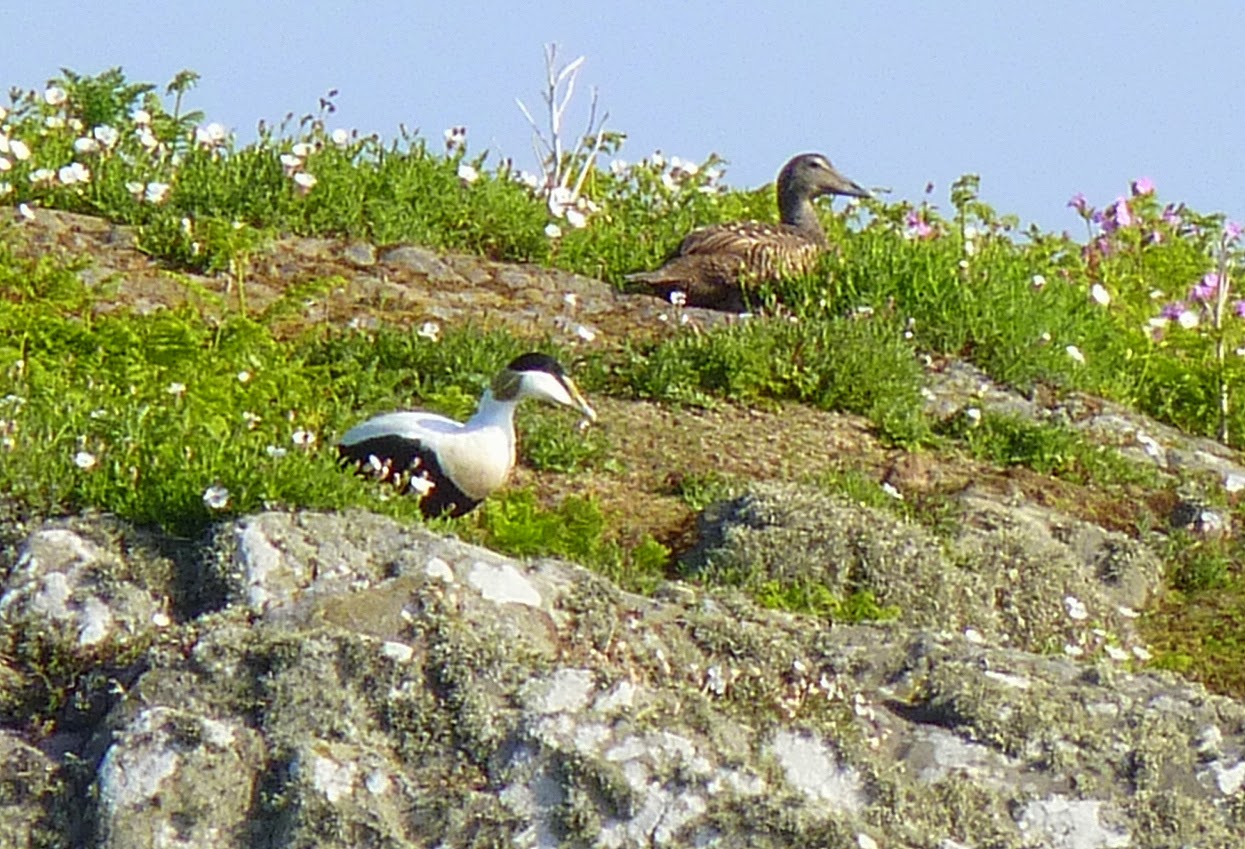
The male is unmistakable, with its black and white
plumage and green nape.
This species dives for crustaceans and molluscs, with
mussels being a favoured food. The eider will eat mussels by swallowing them
whole; the shells are then crushed in their gizzard and excreted. When eating a
crab, the Eider will remove all of its claws and legs, and then eat the body in
a similar fashion.
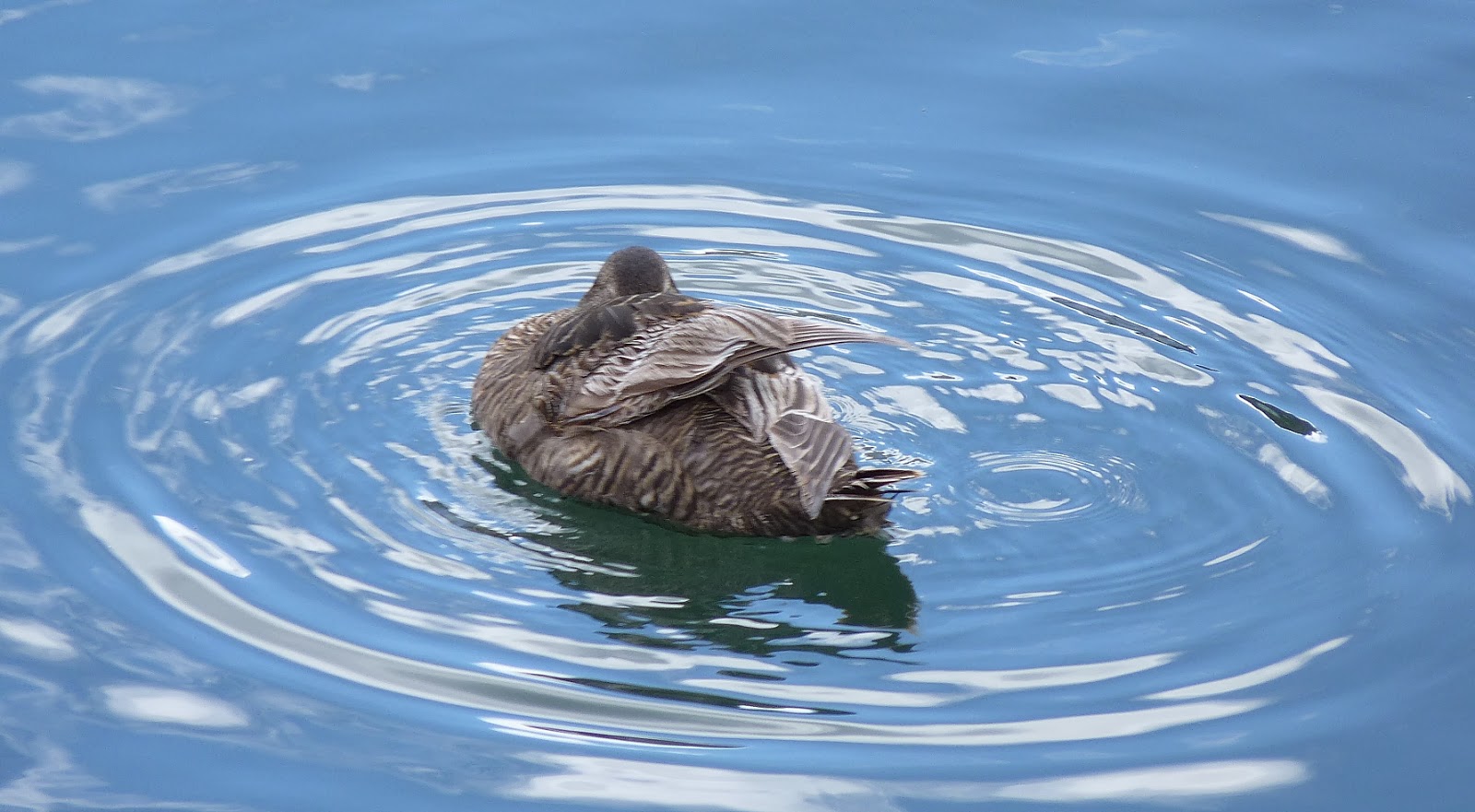
The female is a brown bird, but can still be readily
distinguished from all ducks, except other eider species, on the basis of size
and head shape. This duck's call is "ah-ooo". The species is often
readily approachable.
Drakes of the European, eastern North American and
Asia/western North American races can be distinguished by minor differences in
plumage and bill colour. Some authorities place the subspecies v-nigra as a
separate species.
This male Eider above is in Eclipse plumage.
In Canada's Hudson Bay, important eider die-offs were
observed in the 1990s by local populations due to quickly changing ice flow
patterns. The Canadian Wildlife Service has spent several years gathering
up-to-date information on their populations, and preliminary results seem to
show a population recovery. The Common
Eider is the object of a 2011 feature length documentary, People of a Feather,
which studies the historical relationship between the Sanikiluaq community and
eiders, as well as various aspects of their ecology. The
director/cinematographer/biologist Joel Heath spent seven years on the project
and writing biological articles on the Common Eider.
These Eider are in breeding plumage. Some breeds in Arctic and some northern temperate
regions, but winters somewhat farther south in temperate zones, when it can
form large flocks on coastal waters.
In Canada's Hudson Bay, important eider die-offs were
observed in the 1990s by local populations due to quickly changing ice flow
patterns. The Canadian Wildlife Service has spent several years gathering
up-to-date information on their populations, and preliminary results seem to
show a population recovery. The Common
Eider is the object of a 2011 feature length documentary, People of a Feather,
which studies the historical relationship between the Sanikiluaq community and
eiders, as well as various aspects of their ecology. The
director/cinematographer/biologist Joel Heath spent seven years on the project
and writing biological articles on the Common Eider.
The Common Eider is one of the species to which the
Agreement on the Conservation of African-Eurasian Migratory Waterbirds (AEWA)
applies.
The eider's nest is built close to the sea and is lined
with the celebrated eiderdown, plucked from the female's breast. This soft and
warm lining has long been harvested for filling pillows and quilts, but in more
recent years has been largely replaced by down from domestic farm-geese and
synthetic alternatives. Although eiderdown pillows or quilts are now a rarity,
eiderdown harvesting continues and is sustainable, as it can be done after the
ducklings leave the nest with no harm to the birds.
The
duck spend most of the year at sea returning in February for the breeding
season.
Eiders are colonial breeders. They nest on coastal
islands in colonies ranging in size of less than 100 to upwards of
10,000-15,000 individuals.
Female eiders
frequently exhibit a high degree of natal philopatry, where they return to
breed on the same island where they were hatched. This can lead to a high
degree of relatedness between individuals nesting on the same island, as well
as the development of kin-based female social structures. This relatedness has likely played a role in
the evolution of co-operative breeding behaviours amongstEeiders. Examples of
these behaviours include laying eggs in the nests of related individuals and crèching, where female eiders team up.
The
Latin name for the Common Eider seen along our coast is ‘Somateria mollissima’. ‘Mollissima’ refers to their favourite food of mussels.
They can fly at speeds up to 70 mph.
A particularly famous colony of eiders lives on the
Farne Islands in Northumberland, England. These birds were the subject of one
of the first ever bird protection laws, established by Saint Cuthbert in the
year 676. About 1,000 pairs still nest there every year. Because St. Cuthbert
is the patron saint of Northumberland, it was natural that the eider should be
chosen as the county's emblem bird; the birds are still often called Cuddy's
ducks in the area, "Cuddy" being the familiar form of "Cuthbert".
Above is a stained glass window in St Cuthbert’s Church
in Amble depicting the scene of St Cuthbert with his beloved eider.
This video is mainly of Eiders that Eileen and I saw
when we walked round Ballymacormick Point
Now for the video. Be warned, it is shaky so some may need sea sickness tablets (Tex). I have tried to stabilise it as best I can.
You can access the video at
http://youtu.be/64Iyhs7BXYY
If this is a black space below, click it and the video will appear.
I hope everyone was OK after the video and I hope you all enjoyed the seeing and learning about the beautiful Eider duck.
Tomorrow, Eileen and I take a walk around Ballymacormick Pint where this video was filmed and I will show you what birds we found.
Thanks for visiting today.


.JPG)