Tuesday, 6 August 2013

Birds and Blue Grass!

I was very annoyed yesterday because I had lost some great photographs I have taken about a month ago and edited for a future post.  I spent hours going through thousands of photos on 3 systems - but nothing.  Now could I have deleted them!!  So I went for a walk yesterday evening just over the road into Ward Park and these are the photos I took.  I will start with the birds seen and photographed.

Golden Pheasant
Greylag
This may be a hybrid between Greylag and  Canada Goose


This year a lot of young birds have been bred and unfortunately none of them have their names up!!  I have spoken to the man who looks after them but no change!  It is very difficult to photograph these birds because you have to shot through a 1" square wire fence!!


                                                                     Reeves Pheasant


There are plenty of Black headed Gulls both adults and young.


This is the Temminck's Tragopan.  It is distributed in forests of northern South Asia, from northeast India, northwest Vietnam, Tibet and northern provinces of China and Ward Park have a pair.


This is the male whose head is black, forming a mask around the blue facial skin that is extended during courtship; deep orange-red on crest, neck and breast; some males with bright orange collar; rest of body crimson, covered with grey spots on lower breast and black-lined white spots on wing coverts, back and upper tail coverts.   I was not able to get a photo of the female who is a  white-spotted brown bird with blue circular eye skin.  Both birds are very shy.  Its diet consists mainly of berries, grass and plants.


Peacock
We have quite a number of both male and female Peacocks at differing ages.

Song Thrush with young Starling.
There were quite a number of starlings together and at night they come in and roost in a large tree just above where I took this shot.  They must have been having their supper before going to bed!


About a week ago I showed you these Echinops that had not got the blue colour then, now they are covered in bees.  Now which ones?  I think there are 2 different ones here.

Can I say a big thank you to both Roy and Trevor for all the help they gave me in yesterdays' post and all the information and web sites that I can look up to try and learn ID of butterflies and bees.

If I had spent the time trying to work out these bees ID, you would NOT have a post today!


A big snail that had nearly reached the top of a 3' plant!

I love walking through this Rose arch as do many other people.  Children love running through it.


I was VERY surprised to see this moth and even more surprised that I was able to photograph it and then to be able to ID it was a real miracle!!  That was only because in yesterday's post I had photographed one when I had visited the RSBP Reserve in Belfast.  I only know the names of 3 moths as yet and this was one of them!!!


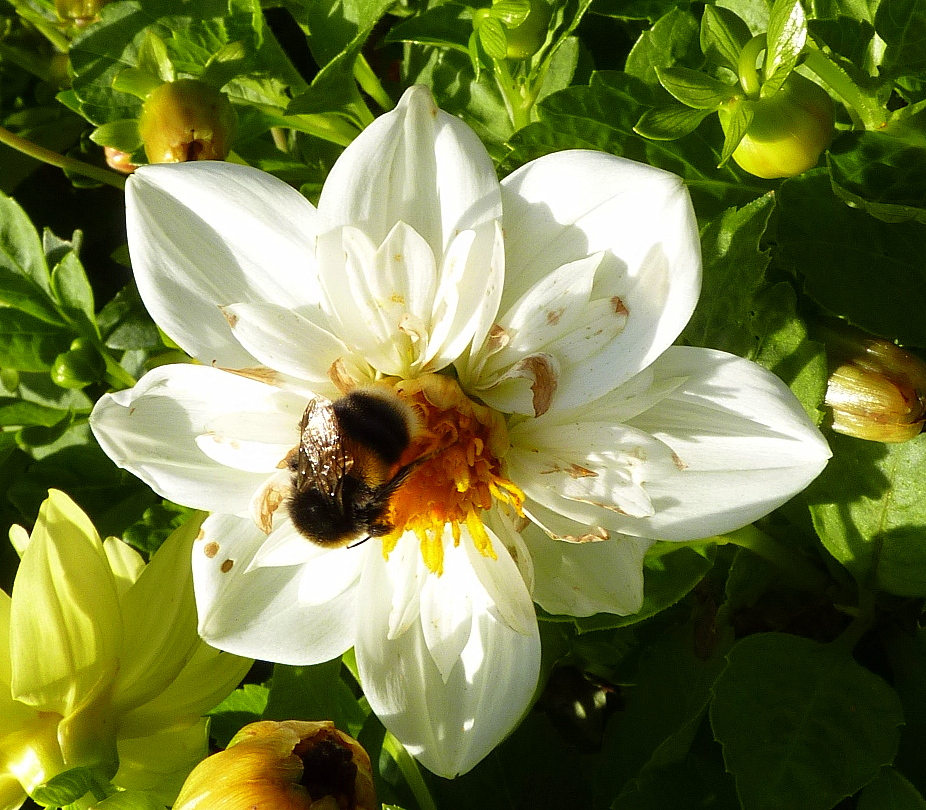
Now to some of the flowers in the park.  Sit back and enjoy these beautiful bedding Dahlias.


Ah!  Some more wonderful bees.  Please feel free to let me know their names if you can.  I will add them to the post.


Then the park had also been planted with beds of Cosmos in a wonderful variety of colours.


Wow!   Another Bee!
Astilbe

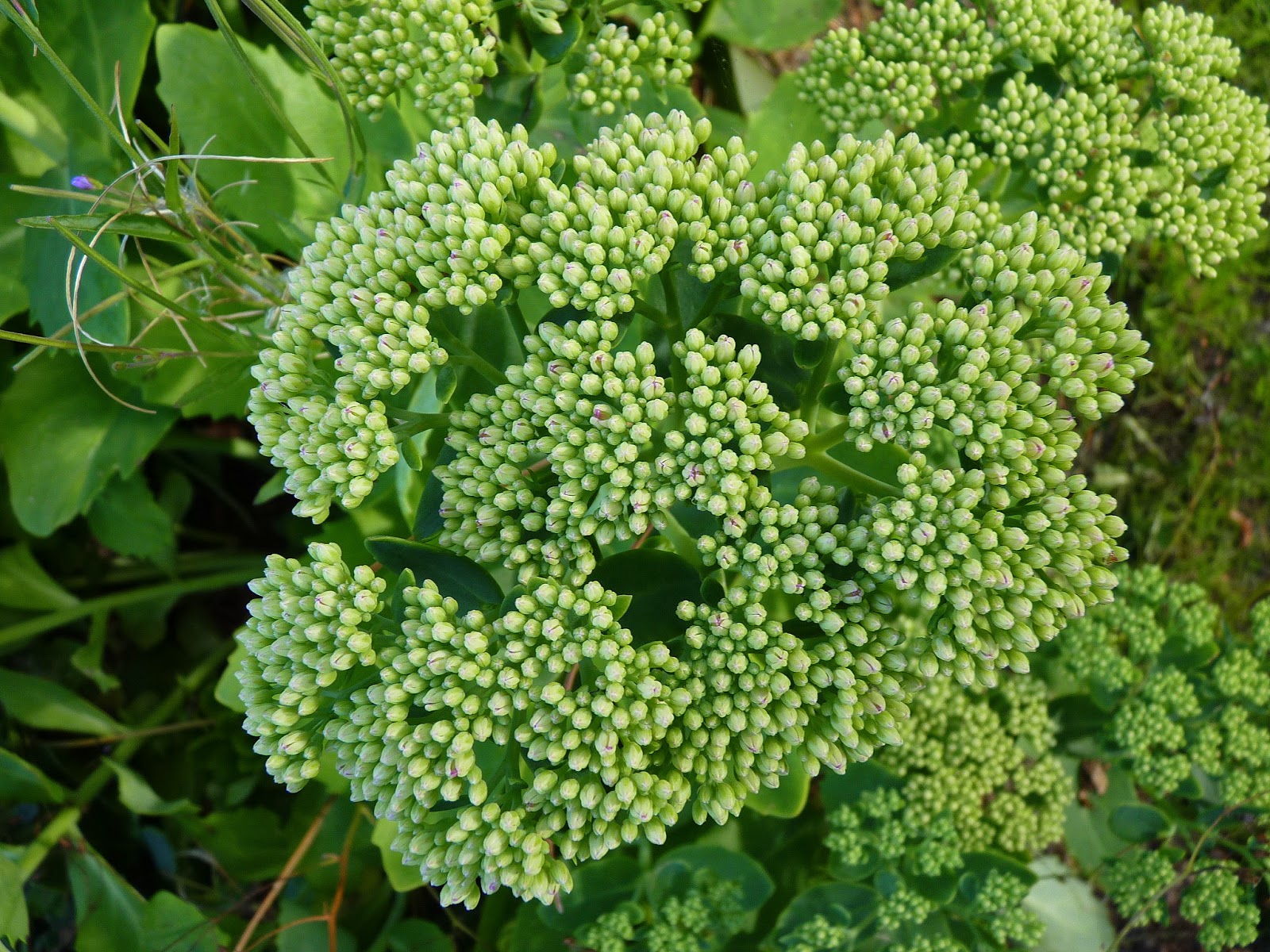
Sedum before the colour has appeared
Yarrow

I thought the way the parks division had planted this wonderful scarlet Crocosmia with the brightly coloured Yarrow was brilliant.


This is only a small part of the large crowd that gathered last Sunday to hear 'music in the park'.  During July and August every Sunday between 3.00pm - 5.00pm there is a different band or group and the Council provide deck chairs and picnic tables as a lot of people bring picnics.


“Oh My Darling” band who have prairie roots mixed with bluegrass, Appalachian old time, southern twang, and Franco-folk, making their style a melting pot of musical languages, were expected at the weekly concerts at Ward Park last Sunday, just beside where I live.  Unfortunately they got held up with the security alert at Heathrow Airport.


However, it was not all bad as the Irish are always very resilient and at the very last minute they gathered together 4 very talented musicians and I think they may have called themselves the Ho Bo’s band.  Anyhow they were brilliant and I videoed 2 songs for you to listen to.  It can be accessed at

http://youtu.be/789my1f62YM    If the space below is black, click it!


I hope you enjoyed this post.  I have come to terms with losing my photos!!!
Thanks for visiting and hope you will pop in again soon.

MANY THANKS TO ALL who left comments on any of my post yesterday

Monday, 5 August 2013

Butterflies and Bees

The other day when I was at the RSPB Reserve, Catherine Bertrand of the Northern Ireland Butterfly Conservation was there to talk to a group about the butterflies and Moths that are found in N.Ireland.  When the rain stopped they went out with butterfly nets to see what they could catch. 
I was fortunate to photograph the 3 moths below.

Magpie Moth
Riband Wave

Gold Spangle
In Northern  Ireland  we have around 1000 Moths and 33 Butterflies and at present over all the UK they are doing a survey  between now and the 11 August.  They are asking people to contact them with the butterflies that they have seen.  Information at www.bigbutterflycount.org


There were also these Cinnabar caterpillars.

Does anyone know what this is above?
Could this be a Cream-streaked Ladybird (harmonia quadripunctata)
After I  left the Reserve, I went along to Kinnegar and I found a place that looked pretty good for seeing some Insects, Moths and Butterflies.  Now I am a real novice at IDing any of these so I will need a great deal of help from the many bloggers that do know.  I was extremely pleased that I managed to get some photos although quite a few are not in perfect focus.  


Cinnabar caterpillar on Ragwort

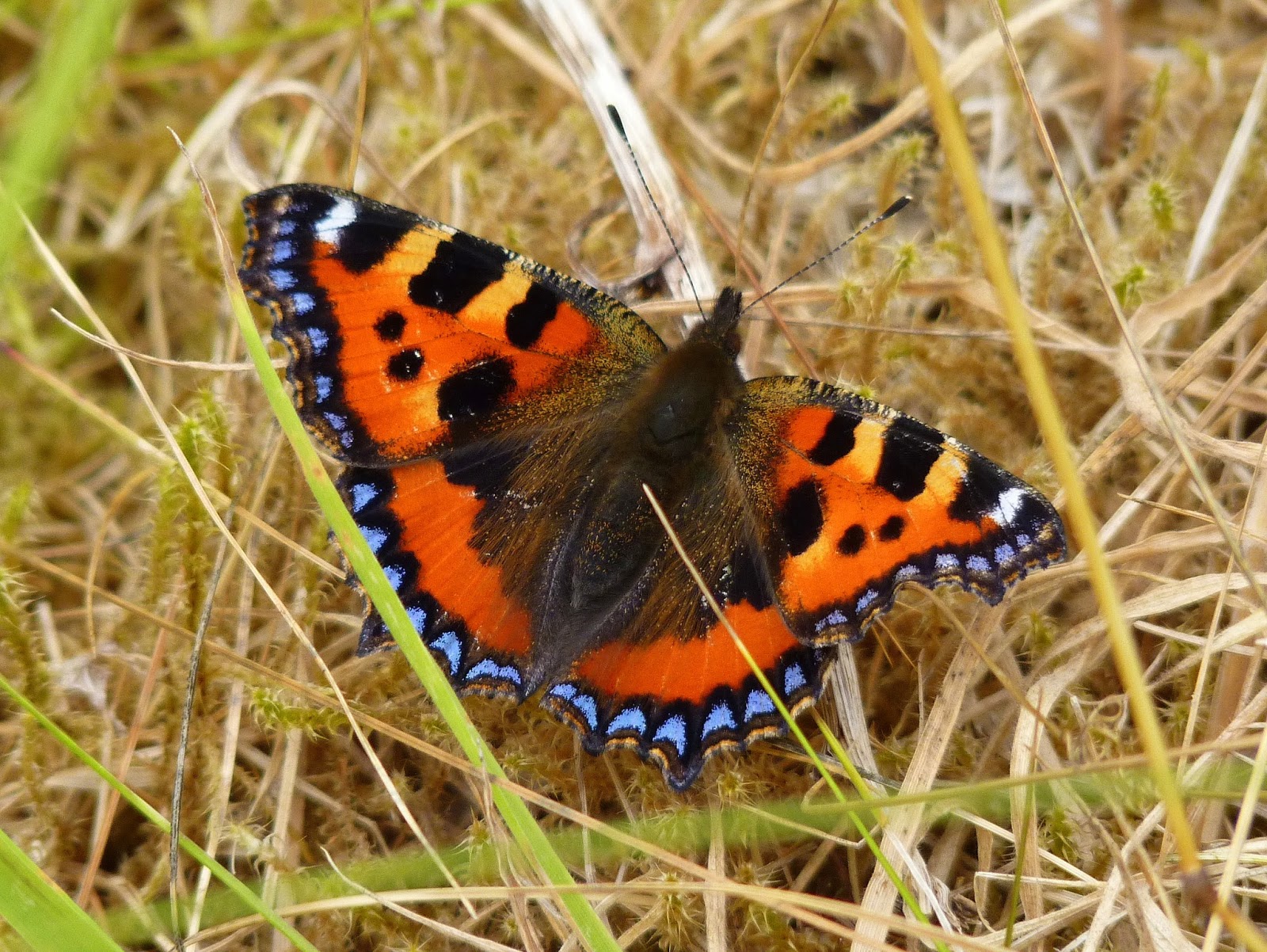
I was delighted to see the beautiful Small Tortoiseshell above.


 Green - veined White


Ringlet


Now I have no idea what these insects are.  
Could the above be a sawfly (rhogogaster viridis)

Common Red Soldier Beetle (rhagonycha fulva)


The following shots are of the six-spot Burnet moth (Zygaena filipendulae) that is a brightly coloured day-flying moth.  Its bright colours warn potential predators that it is poisonous. The blackish fore wings have a metallic sheen and feature red spots that earn the species its common name. Despite the name, however, the number of spots can vary between individuals, and may be fused in some cases. The red hind wings have a fine bluish border and the antennae are club-shaped . A colour form known as f. flava has yellow spots in place of the normal red ones.  Very occasionally, specimens with brown spots are also seen.


The colouration and the day flying are both linked to the fact that they are poisonous.  It is safe enough for them to fly during the day as birds, and other predators, quickly learn that these moths taste horrible and can cause stomach upsets.  Their colouration advertises this fact.
They become poisonous as caterpillars.  The plants they feed on contain very small amounts of cyanide and the caterpillars are not only immune to this but make use of it.  The toxins from the leaves they eat are saved in the caterpillar’s bodies as their own protection from predators.  After metamorphosis they remain slightly poisonous.


I know that there is a five spot Burnet and I was not sure if this one above could be one as I could not count 6 spots however when I did some research I discovered that the spot numbers varied!  So how do you tell the difference?


The six-spot Burnet moth is found throughout Europe, including the UK.  It has black (or very dark green) wings vividly spotted in red. Occasionally their spots are yellow, brown or black. Usually there are six spots on each wing but sometimes there are more and sometimes they are fused.  With a wingspan of just over an inch it is a medium sized moth.  The antennae are rather like a butterfly’s given that they end in clubs.


Now I tried to photograph bees with great difficulty and I am not sure of any of the names but I will have a go and  PLEASE someone help me to ID them properly.

1.
I think this one above is Carder bee Bombus pascorum

2 & 4. are either
Bombus hortorum, the Garden Bumblebee or Horse-faced bee – they have very long faces if seen from the front.
Bombus jonellus, the Heath Bumblebee, who has a very short little round face.  Their markings are exactly the same
 
3.

4.

5.
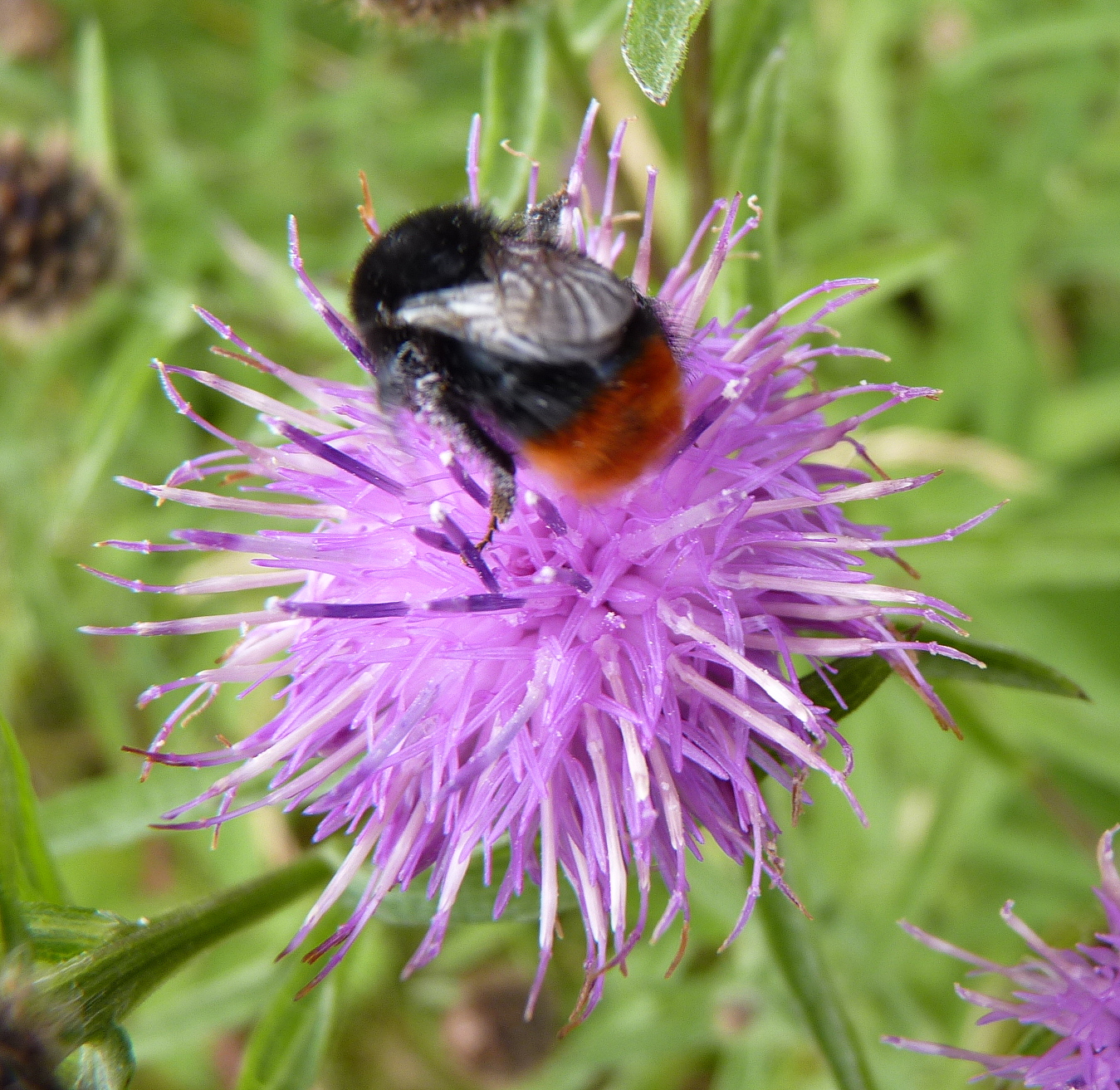
5, 6 & 7 are Red Bottomed Bee Bombus lapidaries

6.

                                                                                7.

Thanks for visiting my post today and I hope the experts will come to my rescue on ID today.

MANY THANKS TO ALL WHO COMMENTED yesterday on any of my post and in particular Linda and Ginny who had a good laugh at my 'Hooked Crow'.  This was a typo mistake of mine and it is now corrected to a Hooded Crow.  Also to Tex, Anni and Keith for explaining to me about the Magpie's eye.

Hope you will visit again soon.


Sunday, 4 August 2013

Belfat Birding - Part 2

This post today is a continuation of yesterday's and as I cannot leave replies (frustratingly) to any of your comments I would just like to say that all the photographs yesterday were all taken from inside the RSPB Reserve, as are the first 3 below and I appreciate all those people who enjoy the researched information that I add to most posts.


Common Tern


Lapwing Juvenile

Moorhen Juvenile

 Now just along the road from the RSPB Reserve is any area called Kinnegar and it is always worth having a look to see what is about. 


I saw this Hooded Crow above with the young one below however I have a feeling the young one is a hybrid.  Any thoughts on this I would appreciate?


To the right of the road is a small lake and that is where I saw the birds below.


Little Egret which was quite a distance away so this shot is not great.


As well as the Little Egret and Black headed Gulls there was a young Heron on the left of photo.


These are some Redshank and a few Black tailed Godwits having a snooze.


This Magpie's eye looked a bit funny to me.  Anyone know why?

There was only 1 Mute Swan and this Black tailed Godwit on this side of the road so today I thought I would share some interesting facts about Swans with you. Many of you will know some of them however there may be a few you have not heard of.

The beautiful snowy feathers and long graceful neck have created a picture that many artists have worked hard to recreate. There are logos, associations, organisations, home decor and more inspired by the beauty.

Mute Swan and Black tailed Godwit

  • The mute swan is the one that most Americans and Europeans are familiar with.
  • A swan mates for life.
  • The adult male is called a cob. He is the only known bird to have a penis.
  • He is both a devoted father and husband. He has been known to use a blow from the “knucklebone” of his wing to defend his family. His blow is said to be strong enough to break a man’s arm according to Donald and Louise Peattie in “Legend with Wings.”
  • The Mute Swan is perhaps the noisiest of all swans having eight different sounds in its repertoire.
  • Swans can fly as fast as 50 to 60 miles per hour.
  • Some have a wing span of 10 feet.


  • Swans were nearing extinction in the 1930s in the U.S. but due to measures taken to protect them their population is again growing.
  • A baby swan or cygnet has a grey feathered coat until it reaches about 20 pounds. Then it too will become snowy white like its parents.
  • A baby swan pecks at the inside of the egg for 24 hours prior to making its entrance.
  • The female swan is referred to as a pen.
  • Visually the most noticeable difference between the male and female swan is size, unlike many other animals where the male and female are coloured differently.
  • The typical weight of a swan is from 25 to 35 pounds and height while standing alert 4 feet.
  • From the tip of the bill to the end of their tail they measure 5 feet.

Mute Swan on left hand side of road on sea side.

  • The regal beauty is one of the reasons for the swan to be considered as a royal bird in England and all swans found in the open waters belong to the crown.
  • A mother swan has a sound similar to a yipping puppy, which it uses to call the young to her.
  • Swans are the largest known flying bird.
  • They are not known to attack humans without cause, and actually can remember humans that have been kind to them.
  • They dine off of aquatic vegetation, insects, tiny fish and tadpoles. Because they are able to reach far below the water’s surface, they have actually broken plants apart and left them floating on the water which enables smaller birds to find ready food.
  • The mute swan’s neck has 23 vertebrae which is more than any other bird.
  • Their life expectancy in a protected environment is as long as 30 years.
  • Swans are another of the many marvels created by God.


 Oystercatcher and 4 Ringed Plovers
 Ringed Plovers are one of my favourite small waders and there are some interesting facts about them.
  • If a potential predator approaches its nest, the Common Ringed Plover will feign a broken wing to lure the intruder away.
  • It will sometimes use "foot-trembling" to stir up food and startled prey into movement.
  • Males tend to perform more night time egg incubation, while females incubate more during the day.
  • A group of plovers has many collective nouns, including a "brace", "congregation", "deceit", "ponderance" and "wing" of plovers.
I hope you enjoyed this post and I thanks you for visiting it.
MANY THANKS TO ALL who left comments on any of my post yesterday.